
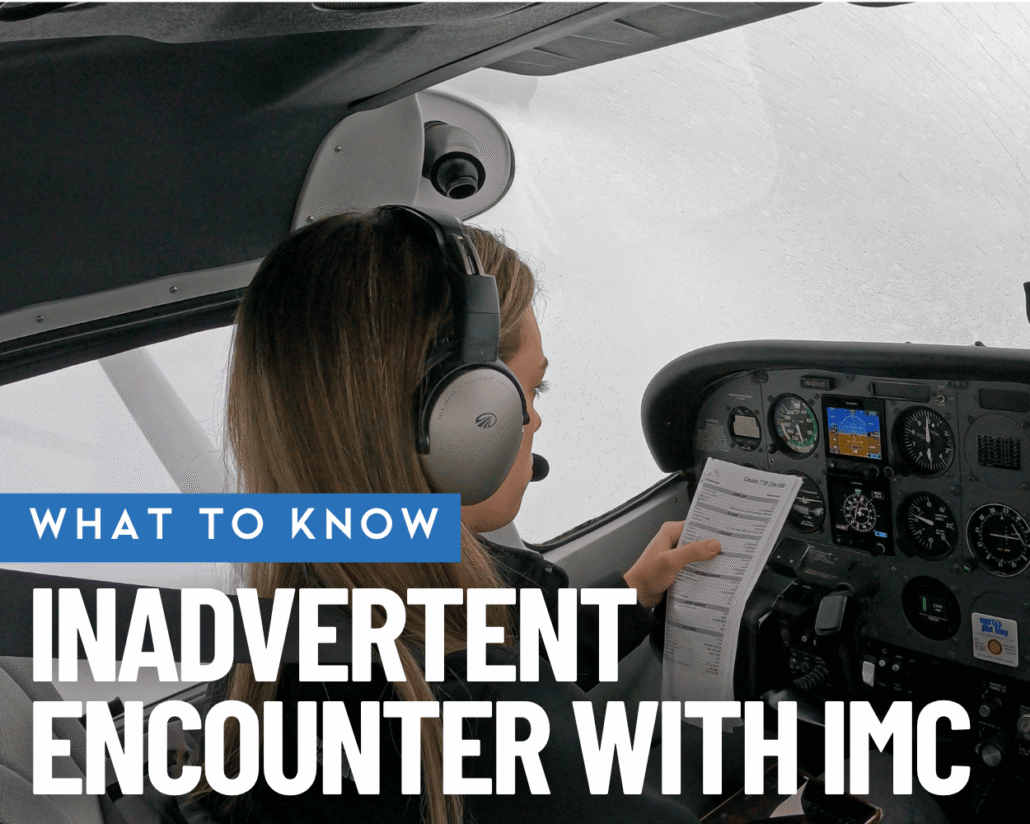
Cheat Like Your Life Depends on It—Because It Might!
|
Getting your Trinity Audio player ready...
|
Part 1—An Inadvertent Encounter with Instrument Conditions
Welcome to Part 1 of Cheat Like Your Life Depends on It–Because It Might! In this segment, we’ll be talking about how to cheat your way out of an inadvertent encounter with instrument meteorological conditions (IMC). During Part 2 we will take a look at cheating your way through a partial panel instrument encounter.
When you take your Private Pilot practical exam, you will be required to demonstrate your ability to fly the airplane solely by reference to instruments. This basic attitude instrument (BAI) flying demonstration comes after around 3 hours of practice. The private BAI is intended to show that you could maintain control after an inadvertent instrument conditions encounter at the time of the practical exam. If there have been more than a couple of months on the calendar since you last practiced this perishable skill, you may not be successful in the event of an actual encounter.
For the practical exam, be prepared to shine during your demonstrations with the examiner. In an ideal world, you would continue to practice these perishable skills after your exam and stay proficient in case you really need them. In a less than perfect world, cheat like your life depends on it—because it might!
Use All Available Tools
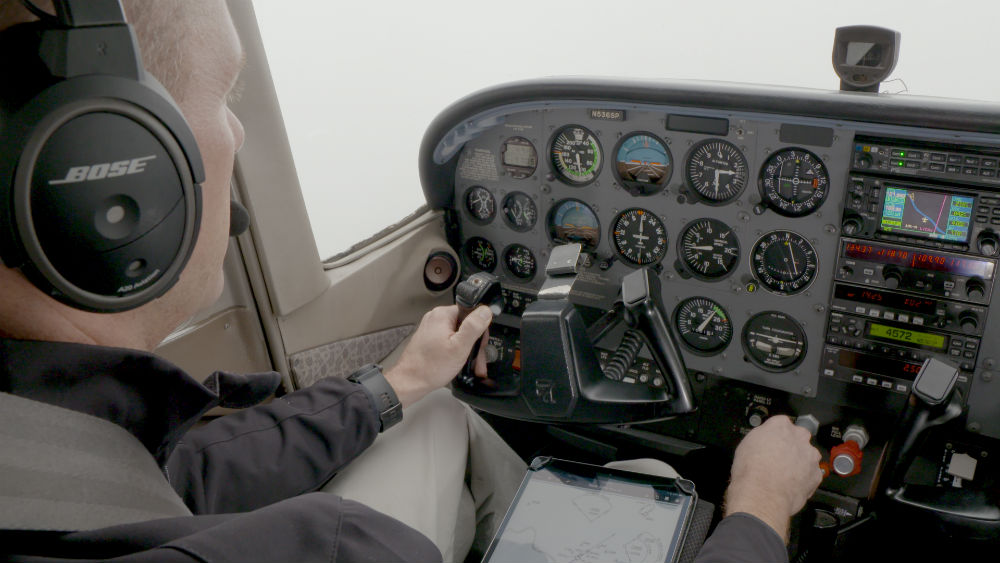
Use every tool at your disposal, not just the tools that you were required to demonstrate on your practical exam.
What do I mean when I say, “cheat like your life depends on it?” I mean use every tool at your disposal, not just the tools that you were required to demonstrate on your practical exam.
The Airman Certification Standards are prescriptive on what tools you may use during emergency demonstrations for the practical exam. While they have been updated in recent years, the practical exam demonstrations described are based upon an earlier time when we generally had fewer tools in our flight bag and installed in the instrument panel. They originated in older training and testing standards when flight decks were exclusively analog and GPS was just a dream for the general aviation pilot. Pilot tools were limited to paper charts, a plotter, an E6B, and similar analog tools.
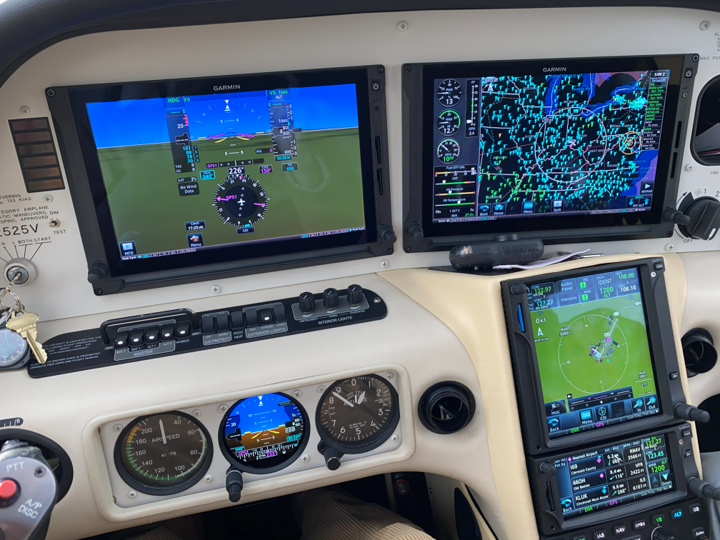
You may have more powerful tools on the smartphone in your pocket. Unless you are flying an older airplane with no upgrades since it was new, you likely have more powerful tools installed in the panel as well.
Here are few of those modern tools. You will have to determine which are right for you and your flight operations. Using some of these to “cheat” will be described below.
- An installed GPS with moving map.
- An installed and working autopilot
- A smartphone, or at least a dumb cell phone, with a good charge
- A portable GPS source and an ADS-B In unit that will work with your personal EFB device/app. An ADS-B Unit with a built-in backup (AHRS) is even better.
- An EFB device/app to display the GPS data on a moving map and to display backup AHRS information. Having a way to mount this within your view is even better.
- A hand-held portable radio
- A good, fully-charged battery pack with a sufficient milliamp-hour rating for powering your portable devices in the event of an electrical problem. Don’t forget the cables that you will need.
- Flashlights are not new, but they have become brighter, use less power, and may be rechargeable with that handy battery pack.
- While things like a Starlink system, a satellite messenger, or a personal locator beacon (PLB) may be less useful for the inital cheat, they can be very valuable when other communication systems are no longer available after an off-airport event.
Like the tasks that you learned for your practical exam, you will need to get training and learn how to use these tools. On the bright side, many are easier to learn and use, and you may use some of these on every flight so that you will stay proficient when it comes time to cheat.
Emergency Autopilot Use during an Inadvertent Encounter with Instrument Conditions

Past studies and the accident statistics demonstrate that the BAI training for private pilot certification is not adequate after an extended period of time. An inadvertent encounter with instrument conditions can be fatal for a visual pilot, especially if it has been some time since they last practiced BAI. The emergency 180° turn may get you back out of the conditions, but you need to be able to complete this maneuver safely. It is time to cheat to save your life.
Key point: An installed and working autopilot can be a lifesaver in this situation if you know how to use it and you put it to use.
An installed and working autopilot can be a lifesaver in this situation if you know how to use it and you put it to use. Even a basic level of operational knowledge is better than letting the box sit idle while you are struggling to maintain control of the aircraft. This type of encounter is no time for pilot heroics when the autopilot can do a better job.
You need to know how to engage the autopilot and understand what it will do after being engaged. Some modern autopilots can recover from some relatively extreme unusual attitudes with the touch of a button while other autopilots might try to level the wings without making any changes to the pitch once engaged. Engaging the autopilot after an instrument meteorologic conditions (IMC) encounter but before control is lost is within the handling capabilities of most autopilots.
Before you need to use it in an emergency, get with a flight instructor and understand how your autopilot will react. When possible and within the limitations of the device, demonstrating the recovery capabilities of the autopilot in the airplane on a VFR day can be very enlightening.
Once you have the autopilot engaged, utilize it to level-off and make the emergency 180° turn. If your autopilot is a single-axis device, trim the airplane for level flight and utilize the box to change the heading. If you are lucky enough to have one of the newer single-button recovery autopilots, the touch of a button will level your wings and pitch for level flight. Use heading mode to turn yourself around and fly out of the IMC conditions. With the autopilot handling the aircraft control, you are free to manage the emergency and utilize other resources such as air traffic control to help you get clear of the weather.
The autopilot could also save your life in other situations that don’t involve actual IMC. More than one VFR pilot has succumbed to spatial disorientation while flying in visual conditions with an obscured horizon or over water at night. While legal to fly in these conditions, they can be deadly. If you are too far into the flight to cancel, cheat with the autopilot and live to tell the tale.
Do not use the autopilot to venture into conditions where you should not be, but if you end up in those conditions, by all means, use it to help you get to safety.
“Cheating” IMC without an Autopilot

An ADS-B In unit with a built-in backup AHRS can be a big help in an aircraft without an autopilot.
While a working autopilot is your best tool after an inadvertent IMC encounter, there may be other cheats to improve your odds if one is not installed.
If you are flying an older airplane without an autopilot, it probably has smaller round-dial, analog gauges. These smaller gauges can sometimes be difficult to scan and interpret if it has been a while. An ADS-B In unit with a built-in backup AHRS, an appropriate app to display it, and a larger EFB screen can help in this situation. Mounted in clear view, this cheat can help you keep the airplane upright and get it turned around. With the synthetic vision options in some apps, this view can be even clearer.
Do not try to set up and mount the backup assistance after the encounter. Consider having the setup ready to go and mounted for all of your flying, especially when you are flying in an area where conditions could change.
Remember, your goal is to use whatever tools you have available to exit the conditions in the smoothest way possible.
Conclusion
If you are preparing for a practical exam, by all means, get ready for what you need to demonstrate on the exam. After you have completed the exam, congratulations on your accomplishment. Now, take some time to figure out how you will handle a real encounter with IMC after some time has passed. Ideally, you will continue to train and remain proficient on all of your emergency skills. Even with proficient skills, using your available resources is always a good decision. If your skills have degraded and the emergency occurs, learn to cheat like your life depends on it, because it might.
Fly and stay safe!

In his role as Director of Aviation Curriculum for Sporty's, Chief Jurgens develops material which eventually becomes a part of the courseware sold through Sporty's Pilot Shop.
- Flight Training for Young Pilots: How to Start Flying Early - June 28, 2026
- Cheat Like Your Life Depends on It—Because It Might! - June 1, 2026
- CFI Renewal Requirements Explained (FIRC, IACRA, and 61.197 Tips) - May 4, 2026

Leave a Reply
Want to join the discussion?Feel free to contribute!