Understanding Runway Condition Codes for Winter Operations
|
Getting your Trinity Audio player ready...
|
With winter weather affecting airports across the country, understanding Runway Condition Codes (RwyCC) is essential for pilots planning flights in snow or ice. These codes, published in FICON NOTAMs, give a standardized view of runway surface conditions, helping you evaluate braking performance and make safer go/no-go decisions before landing or departing.

I recommend a simple two-phase approach. First, review the NOTAMs for runway condition information. Second—and just as important—call someone at the destination airport for a first-hand report of actual conditions, whether that’s the FBO or airport management.
The FAA uses a standardized method for reporting runway conditions. Today, airport operators use a defined matrix to evaluate runway surfaces and report conditions to pilots via NOTAMs using Runway Condition Codes (RwyCC). These codes range from 6 (dry pavement) down to 0 (no braking capability) and give pilots a common language to assess runway performance.
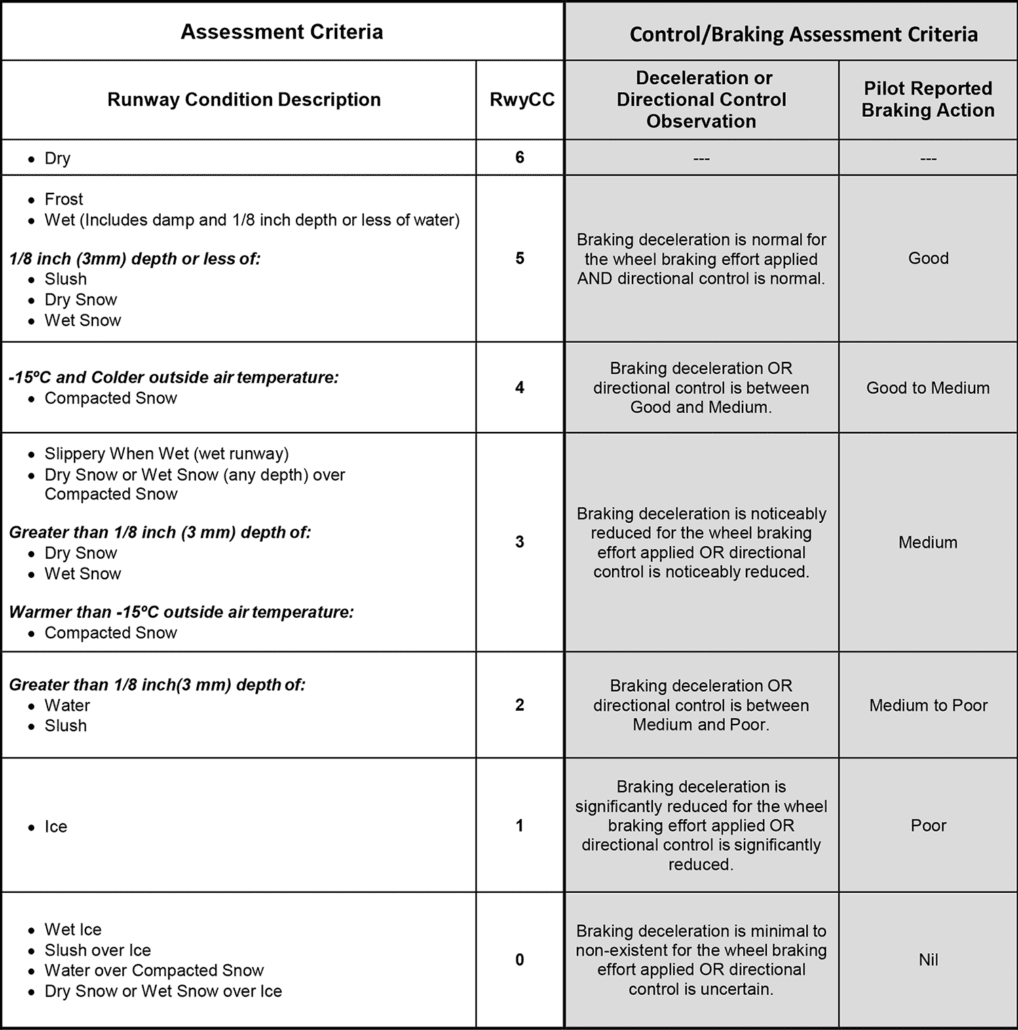
Airport personnel assess the runway surface, identify any contaminants present, and use the Runway Condition Assessment Matrix to determine the appropriate numerical code. Through the Federal NOTAM System, this information is then made available to pilots as a Field Condition (FICON) NOTAM. Pilots can use these codes to better understand how a given runway condition may affect braking and aircraft performance during landing or departure.
Each third of the runway is evaluated and reported separately. For example, a NOTAM reading “RWY 22 FICON 5/5/3” means the first and second thirds of the runway have a RwyCC of 5 (good braking), while the final third has a value of 3 (medium braking).
One practical tip: download the PDF version of the Runway Condition Assessment Matrix and keep it on your iPad for quick reference, both on the ground and in the cockpit. Also remember that these codes apply only to runways. If taxiways, ramps, or parking areas aren’t specifically addressed in the NOTAMs, that follow-up phone call becomes even more valuable for getting the full picture before you arrive.

- Test Your Knowledge: Sharing Flight Expenses with Passengers - March 9, 2026
- RAA Scholarship Applications Now Open for 2026 - March 6, 2026
- How Do Your FAA Written Test Scores Stack Up in 2026? - February 27, 2026

…and for unpaved fields, if you didn’t just fly out of it ALWAYS call someone who can walk out to assess…(among other issues) a frozen unpaved strip is fine, a thawed one, not so good.