
From the DPE: Teaching the Importance of Knowing the Audio Panel
|
Getting your Trinity Audio player ready...
|
I sat there on the practical test while the applicant fumbled, trying to figure out why “the radios didn’t work.”
Sigh.
It was pretty obvious to me, but it certainly wasn’t to them. To some degree, it was their fault. But it was also the fault of the training they had received, which had never introduced them to a simple yet critical component of the avionics package in their aircraft.
The audio panel.
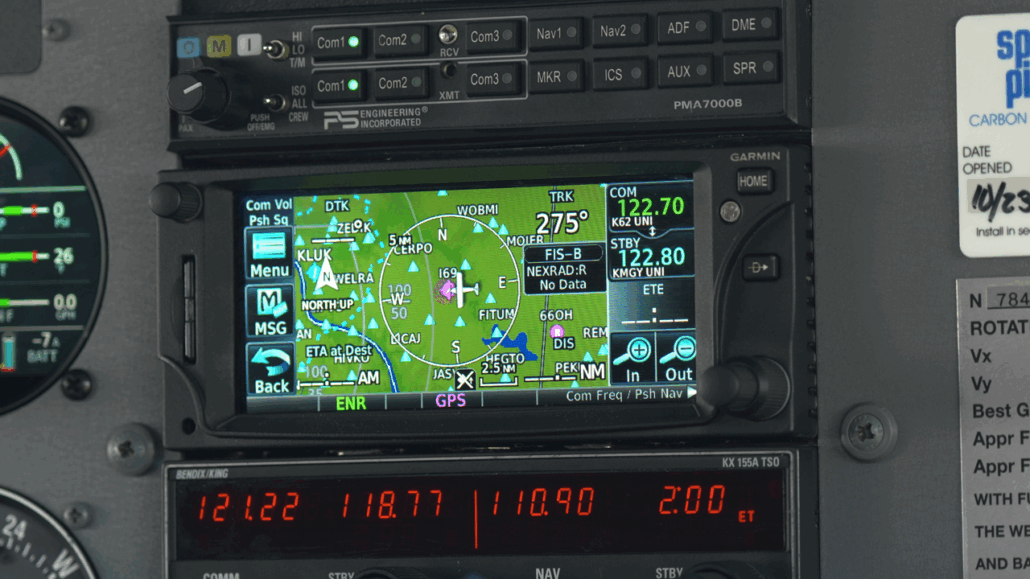
Most general aviation aircraft are equipped with an audio control panel that allows pilots to manage communication and navigation radios. Audio panels commonly include the following functions:
-
Power: The ability to turn the power on or off to the audio panel. Frequently co-functionally located with the volume control. Turned all the way down and past a “click” will commonly mean off for the entire system.
-
Volume: The ability to control radio volume for what the pilot and/or passenger and crew will hear.
-
Communications selector: The ability to switch audio in and transmission between communications radios (if equipped with multiple; most planes have two).
-
Navigation audio selector: Used to monitor radio frequencies to identify stations or potentially hear the transmission of weather information or ATC communications over remote outlets.
-
Intercom controls: Frequently offering isolation of pilot and crew from passenger audio, volume, squelch control, etc.
-
Marker beacon controls: For instrument approaches, these allow a pilot to toggle audio identification of marker beacon signals on or off.
-
Music, Bluetooth, or auxiliary audio inputs: More common in modern panels for additional functionality such as input of music or other devices.
As flight instructors, we emphasize critical aspects of flying: aerodynamics, navigation, emergency procedures, and radio communication. However, one often overlooked component of cockpit management is the aircraft’s audio panel. Proper use of the audio panel ensures clear communication with Air Traffic Control (ATC), other aircraft, and passengers. A pilot who does not understand how to operate this system efficiently can experience confusion, missed instructions, and potentially hazardous situations. Teaching students to master the audio panel early in their training builds confidence and enhances flight safety.
Frequently, when I am doing practical tests, I find applicants don’t know how to fully—or even partially—use these systems. They are used to the settings being pre-set for them, never changing, or they just leave it on one or two functions because they don’t know how to change the configurations or what they mean.
It can be critically helpful to fully understand these systems to properly conduct flight operations.
When I find an instrument student who doesn’t know how to get audio on a navigation radio, it is a pretty clear indication that they have no idea how to identify a VOR or localizer frequency.
If a student has no idea how to monitor audio on a second COM radio—potentially even making sure that the radio is at a lower volume than their primary selected radio—it is an indication that they will have to leave an assigned frequency to listen to weather reports or to contact UNICOM, Flight Service, or any other frequency while still monitoring an assigned frequency. Hopefully, if they did that, they would at least be smart enough to let ATC know they were leaving momentarily and would be back, but frequently I find they don’t, and it means they might miss communications in the interim.
The ability to handle music input from a corded input or a Bluetooth connection is an obvious challenge if it becomes a distraction. One might argue that these connections should not be used during critical phases of flight or during training operations, but frequently they are—and pilots don’t know how to silence or minimize them through their audio panel.
Marker beacons seem to be more of a mystery in general, beyond just understanding how to handle the audio. Many pilots with whom I have flown have no idea why there are even blinking lights for the “O,” “M,” and “I,” let alone that if they unmute the audio for the marker beacon they will hear tones corresponding to overflying one of these markers. Even more confusing for many pilots seems to be the “darn beeping sound” that sometimes occurs as they get near airports. This happens when someone has unmuted the marker function and has no idea what it is or how to mute it again.
I could probably go on, but I think you see the challenges we have here as instructors who forget to focus on the audio panel as a part of their avionics training efforts.
Each aircraft may have slightly different models, and each may have some specific operational knowledge needed, but the general functions are the same across most of the common models. If we teach these, they will be more understandable to our students and improve safety.
Why Audio Panel Proficiency is Crucial
Ensuring Clear Communication with ATC
ATC instructions are essential for safe navigation, especially in controlled airspace. A pilot who does not correctly manage the audio panel may transmit on the wrong frequency, fail to hear ATC instructions, or inadvertently block transmissions. Teaching students to verify and actively manage their selected frequencies prevents confusion and ensures compliance with ATC directives. It can also be important for a pilot to be able to mute their passengers at critical times to limit distractions.
Improving Situational Awareness
Sometimes pilots need to monitor multiple radio frequencies, including ATC, weather advisories, and local traffic. Proper use of the audio panel allows them to isolate specific frequencies or listen to multiple channels simultaneously. This skill is particularly useful during busy operations such as approaching controlled airports or navigating high-traffic airspace.
Managing Cockpit Workload
An overloaded cockpit can lead to mistakes. If students struggle to use the audio panel, they may spend excessive time adjusting controls rather than focusing on flying the aircraft. Teaching students efficient audio panel use—such as quick frequency switching and intercom management—reduces their cognitive load, allowing them to focus on more critical tasks.
Enhancing Communication in Multi-Crew Operations
In more advanced flight training and professional aviation careers, pilots must communicate effectively in multi-crew environments. The ability to manage intercom settings, isolate communications, and prioritize critical transmissions fosters clear and professional cockpit communication.
Ensuring Passenger and Crew Comfort
For flight instructors and commercial pilots, the audio panel is a key tool for managing passenger communication. A well-trained pilot can quickly adjust intercom settings to ensure clear communication without unnecessary distractions.
How to Teach Audio Panel Proficiency
Ground Training and Explanation
Before students interact with the audio panel in flight, provide a detailed ground lesson covering:
-
The purpose and function of each control
-
The difference between COM1 and COM2 usage
-
How to monitor navigation frequencies
-
How to properly set up and verify frequencies before flight
-
The role of the intercom system and how to adjust volume settings
-
Troubleshooting common audio issues
Use a cockpit poster, training simulator, or sit in the aircraft without it running to allow a CFI and student to familiarize themselves with the unit. Supplemental manuals for the audio panel should obviously be shared with the student. Encourage students to verbalize their actions, reinforcing their understanding.
Pre-Flight Checks and Setup
Integrate audio panel management into the pre-flight checklist. Before starting the engine, students should:
-
Verify the correct communication and navigation frequencies
-
Test the intercom and passenger headset settings
-
Check audio panel power and volume settings
-
Ensure active frequency selection aligns with their intended communication needs
Encouraging these habits early fosters a routine that carries into their solo and advanced training.
In-Flight Practice Scenarios
During flight lessons, create real-world scenarios that require students to manage the audio panel effectively. Examples include:
-
Switching between COM1 and COM2 when transitioning from ATIS to ground control
-
Adjusting intercom settings to reduce background noise in a high-workload environment
-
Simulating an audio failure and teaching troubleshooting techniques
-
Monitoring multiple frequencies, such as listening to a CTAF while receiving weather advisories
-
Having your student contact Flight Service on a second radio (this will also show them how to do this in general!)
-
Isolating crew communications in simulated emergencies
Emergency Audio Panel Training
Audio panel malfunctions are rare but possible. Teach students emergency troubleshooting, including:
-
Switching to an alternate COM radio
-
Identifying if the headset, push-to-talk button, or panel is malfunctioning
-
Using a backup hand microphone with the system if their headset or transmit buttons are not functioning
The aircraft audio panel is an essential yet often underemphasized component of cockpit management. By systematically teaching its functions, importance, and real-world applications, flight instructors prepare students for effective and safe communication in all flight environments. A pilot proficient in audio panel management not only enhances their own safety but also contributes to a more structured and efficient airspace. Make audio panel training a priority to ensure your students develop strong communication habits that will serve them throughout their aviation careers.
Oh, I almost forgot to tell you about how the practical test applicant managed after his initial troubles.
There was nothing wrong with the aircraft communications radios. The problem was simple: the previous pilot had actually turned the audio panel off for some reason.
Having never been taught anything about the audio panel beyond volume and switching between COM1 and COM2, the pilot had no idea you could even turn it off. It had just always worked for him before.
His response after a couple of minutes of trying to figure it out was to say, “Well, I think it has to be broken, and we will need to call maintenance to fix it.”
Sigh. Again.
I asked, “Are you sure?”
He paused, confused, and obviously not sure.
This was a practical test—something during which you are supposed to be familiar with your aircraft’s systems and operations.
After a slightly awkward pause I said, “If it is a legitimate maintenance issue, I understand the need to call maintenance. However, if it is a pilot performance problem due to lack of proficiency, and I can solve it instead, that is a demonstration of not meeting the ACS standards for knowledge of systems in the aircraft.”
He paused some more and decided to try a little bit more “playing with buttons and knobs,” we will call it.
A little stroke of luck happened, and he happened to push in the volume knob instead of just turning it, which happened to turn the audio panel on and bring it to life. His relief was obvious.
We proceeded from there into the rest of the test, which, unfortunately, ended up unsuccessful. Honestly, it wasn’t as much because I don’t think he had the ability to do the rest of the flight properly, but because by that time he was so rattled that he got himself behind the rest of the task demonstrations. He was so rattled from the start that it finally caught up in misprogramming other actions in the GPS system on the first approach we set up.
It all stemmed from the beginning of the activity, when lack of systems knowledge started the path to failure moving. If this had been a flight in normal operations, not a practical test, I don’t know how it would have gone. He might have just called maintenance and they would have come down and fixed it—by turning it on for him—and he would have felt embarrassed. It might also have been the catalyst of a failure to manage systems in a real-world situation that resulted in worse outcomes. These things may sound like small things to address as a CFI—the audio panel—but they integrate into the rest of the operations our students conduct. Failing to properly do one thing can be the first step down the path to an unsuccessful flight operation. Give your students the skills to avoid taking that first step in the wrong direction, on a checkride or in a real-world flight operation.

A NAFI Master Flight Instructor and 2023 Michigan FAA Safety Team Representative of the Year, Jason has over 30 years of flying experience and two decades as a flight instructor. He was named 2016 Michigan CFI of the Year and has served as Executive Director of the National Association of Flight Instructors. His service includes national committees such as the FAA’s Runway Safety Council, the General Aviation Joint Steering Committee, and the TSA Aviation Safety Advisory Council.
In addition to examiner duties, Jason works with aviation associations and companies as a consultant and writer, focusing on pilot training, testing, and safety. He holds undergraduate degrees in Human Resource Management and International and Comparative Politics, plus a master’s degree in Development Administration from Western Michigan University. Originally from Michigan’s Upper Peninsula, he is an avid outdoorsman who enjoys scuba diving, skiing, hunting, fishing, mountain biking, and golfing.
- From the DPE: Collaborate on Weather Decisions for Checkride Success and Safety - February 16, 2026
- The Solo Cross-Country Requirement Every Student Pilot and CFI Must Know - January 19, 2026
- From the DPE: Teaching the Importance of Knowing the Audio Panel - December 15, 2025
This is a GREAT article, 100% true, and likely universally so.
Great article.
I’d add “What is squelch?” to the list, whether the intercom (and radio) squelch is fixed or adjustable, and how to adjust the squelch if it is adjustable.
As I am heading to check-ride, aren’t the supplements (manuals) for the audio controls required to be onboard and accessible. Basically anything that isn’t in the PoH/AFM? Or instrumentation/controls added after manufacture?
I think you, the DPE, could have and should have handled the situation differently. You could have done something or said something to put the person at ease. Instead you chose to amplify their anxiety. Maybe the on/off switch was the only aspect of the audio panel they weren’t familiar with. For some reason people like you, the ones that have to list every certification and every and all hours, get some pleasure out of seeing people squirm! The reason you have all those certifications and became a DPE was because you have low self esteem. You’re like a power tripping cop at a traffic stop. You need to take a good long look at yourself instead of taking it out on people you are testing. I’m not saying people shouldn’t be tested or given a participation trophy, I’m saying put yourself in their shoes! You say you enjoy mountain biking. I probably have as many biking accomplishments as you have aviation. How would you like it if we went for a bike ride where I put you in situations that made you feel uncomfortable or gave you anxiety, or rode you into the ground because you weren’t in good enough shape? Lighten up Francis!